Utility mountaineering – the modern solution for working at height in industry, construction and facility management
When does utilitarian mountaineering become the most effective solution?
In industry, construction and building management, there are many situations where conventional access is difficult, expensive or even impossible. Work on industrial halls, chimneys, metal structures, bridges, facades or technological installations requires solutions that allow for quick, safe and efficient interventions, without interrupting the activity.
In these situations, utility climbing represents one of the most modern methods of performing work at height. By using rope access techniques and certified equipment, interventions can be carried out in hard-to-reach areas, without erecting scaffolding or using work platforms where these are not effective. A utility climbing company can adapt the access method according to the particularities of each project, reducing execution time and operational costs.
For companies seeking to reduce execution times and optimize costs, utility climbing services offer an important competitive advantage, being used today in almost all industrial sectors.
What is utilitarian mountaineering?
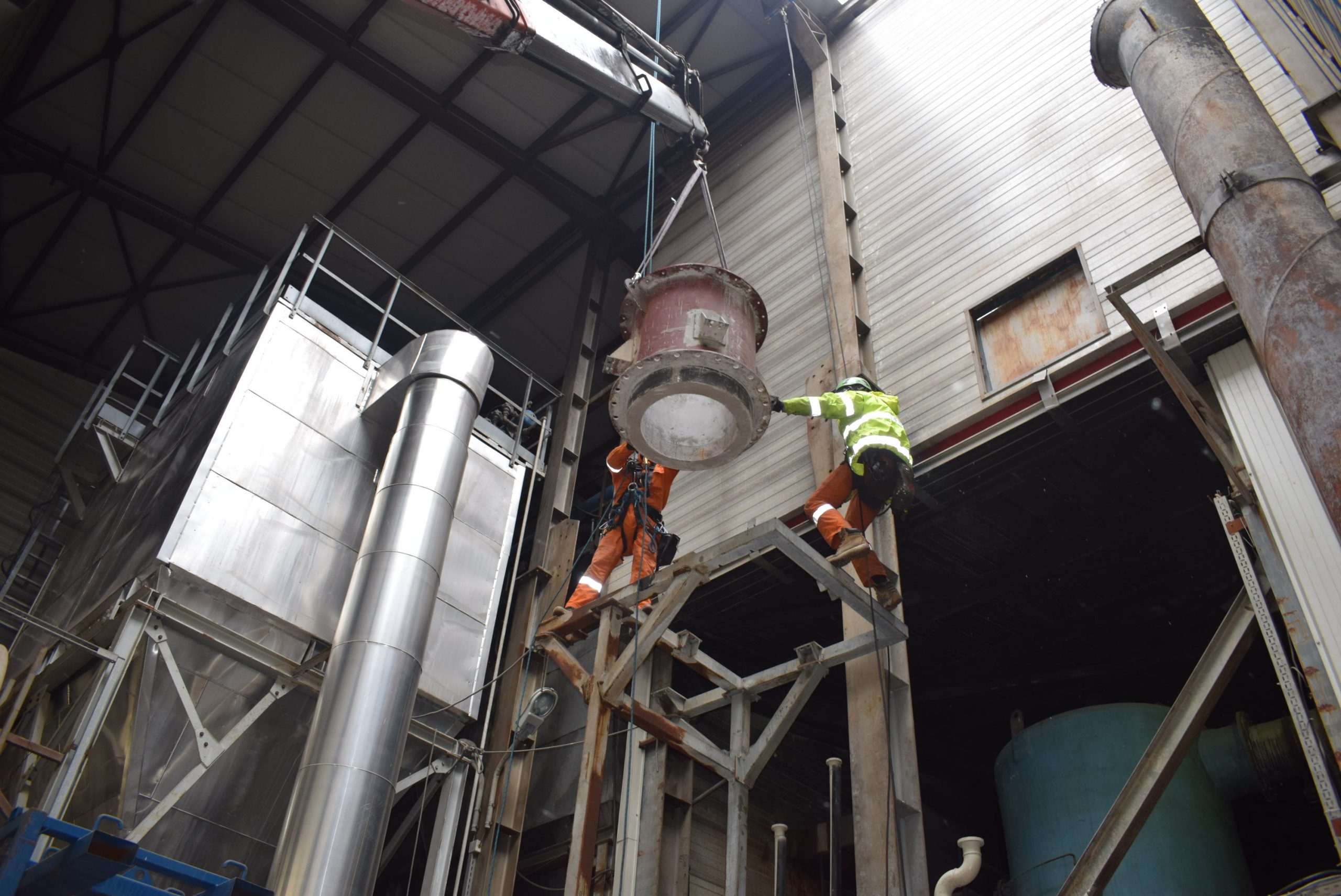
Utility mountaineering, also known as civil-industrial mountaineering, is the method of performing work at height by using rope access and positioning techniques, adapted to the industrial and civil environment.
Unlike sport climbing, the goal is not to climb a route, but to safely perform technical activities in places where access is difficult.
With this method, works such as:
- technical inspections;
- industrial assembly;
- maintenance and upkeep;
- repairs;
- anti-corrosion protection;
- assembly of metal structures;
- installation of fall protection systems;
- works on industrial chimneys;
- cleaning and maintenance of facades;
- emergency interventions.
These utility climbing services are performed by qualified utility climbers, prepared to safely intervene on industrial, commercial and civil targets.
Today, utility climbing is used in industry, energy, construction, telecommunications, logistics and facility management, being recognized for its flexibility and efficiency.
Why are more and more companies choosing utility mountaineering?
Traditional methods, such as scaffolding or work platforms, are still necessary in some projects. However, in many cases, they involve high costs, long assembly times and a significant impact on the beneficiary's activity.
In comparison, utility climbing allows for quick access to hard-to-reach areas and reduced intervention times. For this reason, more and more companies are choosing to collaborate with a utility climbing company to execute complex projects.
The main advantages are:
- rapid team mobilization;
- eliminating the costs generated by scaffolding in many situations;
- access to spaces where machines cannot reach;
- reducing execution times;
- minimal impact on the client's activity;
- high level of safety by complying with specific civil industrial mountaineering procedures;
- flexibility in planning interventions.
For industrial companies, these benefits translate into reduced downtime and optimized operational costs, without compromising the quality of work at height.
Where is utility climbing used?
The scope is much broader than most beneficiaries imagine. Utility climbing services are used in numerous sectors, and utility climbers intervene where conventional access is difficult or ineffective.
Industry
- industrial halls;
- metal structures;
- technological installations;
- industrial baskets;
- silos;
- tanks.
construction
- facades;
- roofs;
- expansion joints;
- architectural elements;
- concrete structures.
Energy
- power plants;
- turbines;
- energy installations;
- transformer stations.
Telecom
- towers;
- pillars;
- antennas;
- communications systems.
Facility Management
- washing facades;
- high-rise window cleaning;
- building maintenance;
- installation of advertising elements;
- periodic inspections.
How is a utilitarian climbing intervention carried out?
A professional utility climbing company never starts work directly in the field. Each project is analyzed and planned so that work at height is carried out safely and efficiently.
Each intervention involves several stages:
1. Site assessment
The structure, access and working conditions are analyzed to identify the most effective method of intervention.
2. Risk identification
All technical and operational risks are assessed, and the necessary measures are established to carry out the work safely.
3. Choosing the access method
Rope access is not always the best solution. Depending on the project, the team determines whether civil-industrial climbing techniques are the most effective option.
4. Intervention planning
The team, equipment, anchor points and rescue plan are established so that the intervention can proceed without interruption.
5. Execution of the work
The intervention is carried out by qualified utility climbers, according to security procedures and applicable standards.
6. Final documentation
At the end of the project, the beneficiary receives reports, photos and technical recommendations for the next maintenance stages.
Why is team experience important?
The success of a project depends not only on the equipment, but especially on the experience of the people performing the work.
A team of utility climbers must understand both rope access techniques and the particularities of the industrial environment: working near installations, coordinating with other teams, following HSE procedures, and quickly adapting to field conditions.
The experience gained in complex projects allows for the rapid identification of risks and the selection of the most efficient technical solutions. For this reason, collaborating with an experienced utility climbing company can significantly contribute to the success of the project and the safe execution of work at height.
Why do companies choose Kreativ Alpin?
Kreativ Alpin is a utility climbing company that offers utility climbing services for industry, construction and facility management, approaching each project through a well-defined process: technical assessment, risk analysis, planning, execution and documentation.
The company carries out interventions on industrial halls, metal structures, industrial chimneys, commercial buildings, energy installations and other objectives where conventional access is difficult or inefficient. The teams of utility climbers perform works using modern civil-industrial climbing methods, adapted to the requirements of each beneficiary.
Each project is treated with the same attention to safety, quality and operational efficiency, and solutions are customized to meet the specific requirements of each objective.
Frequently Asked Questions (FAQ)
Utility mountaineering, also known as civil-industrial mountaineering, is the method of performing work at height using rope access and positioning techniques, used in industry, construction, and facility management.
Utility climbing services are used in industry, energy, telecommunications, construction, logistics and building management, for interventions in difficult-to-reach areas.
Yes. When performed by qualified utility climbers, with certified equipment and appropriate procedures, utility climbing is a method recognized for its high level of safety.
In many situations, utility climbing reduces mobilization time, limits the impact on the beneficiary's activity, and allows access to places where scaffolding or platforms are not practical.
Kreativ Alpin is a utility climbing company with experience in complex industrial projects, offering utility climbing services through teams of specialized utility climbers, with a focus on safety, planning and quality of execution.