- Seoai
- Utility mountaineering, Working at height
- 0 Comments
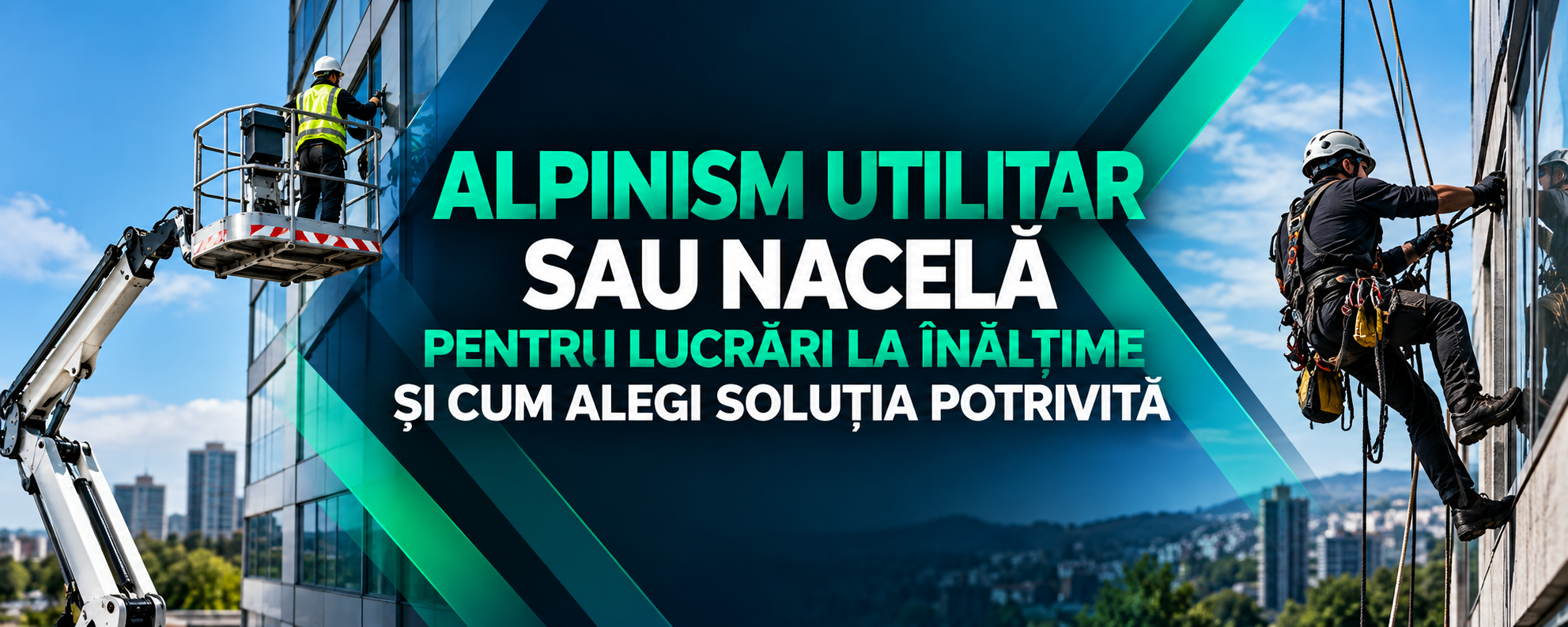
When work at height is to be carried out, one of the first technical decisions is the choice of access method. Two of the solutions commonly used are utility climbing and mobile lifting platforms, also known as aerial platforms.
Both allow for interventions at height, but the differences between them can significantly influence costs, duration of work, site organization, and personnel safety.
What is utility climbing and when is it used?
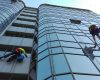
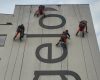
Utility mountaineering is a professional method of access and positioning at height, based on the use of ropes, anchoring systems and personal protective equipment.
This technique allows specialized personnel to reach points where access through conventional methods may be difficult or impossible.
Unlike using a boom lift, the technician does not work from a mechanically raised platform, but is positioned via a rope access system, organized according to applicable safety requirements.
Among the works that can be performed through utilitarian climbing are:
- Technical inspections of facades and industrial structures.
- Repairs and maintenance for high-rise buildings.
- Cleaning and maintenance of facades.
- Installation of technical equipment and installations.
- Interventions on metal structures.
- Anti-corrosion protection works.
- Checking installations located in hard-to-reach areas.
- Punctual interventions on roofs and exterior elements.
One of the advantages of this method is the flexibility of access, especially for complex constructions.
However, Utility climbing should not be chosen solely because it seems faster or cheaper. Before using rope techniques, it must be demonstrated, through a risk assessment, that the work can be performed safely and that the use of other, safer equipment is not justified.
For more information about specialized interventions, see the page utility mountaineering and working at height services offered by Kreativ Alpin.
What is a platform and what work is it recommended for?
The aerial work platform is a mechanized equipment designed to lift people to different heights, by means of a work platform.
Depending on the configuration, it can be mounted on a vehicle, have an articulated or telescopic arm, or use a vertical lifting system.
Aerial platforms are used for numerous maintenance, assembly, construction and repair activities.
They are particularly useful when:
- There is enough space for the placement and operation of the equipment.
- The terrain allows it to be stabilized safely.
- The work requires repeated handling of tools and materials.
- Technicians must travel frequently between different points.
- The activity involves maintaining a working position for longer periods.
For example, for installing equipment on the facade of a hall, at a height accessible to the machine, the platform can provide advantageous ergonomic conditions.
However, the presence of obstacles, narrow spaces or unsuitable terrain may limit its use.
Utility climbing vs. gondola: the main differences
The choice of access method must take into account both the technical possibilities and the level of safety offered for the respective work.
| Criterion | Utility mountaineering | Nacelle |
|---|---|---|
| Access method | Ropes and anchoring systems | Mechanized lifting platform |
| Access in narrow spaces | It can be advantageous | Limited by the dimensions and working radius of the machine |
| The need for ground space | Usually low, but requires safety zone | Requires access, placement and stabilization |
| Punctual work | It can be effective | May require additional mobilization |
| Long-term works | Depends on ergonomics and complexity | Can provide better ergonomic conditions |
| Transport of materials | Requires additional handling solutions | Allows transportation within the permissible load limits |
| Access to complex structures | Can provide high flexibility | Depends on geometry and range |
| Costs | Depends on staff, equipment and complexity | Depends on rental, transportation, operator and duration |
| Safety | Requires risk assessment and specific systems | Requires risk assessment and specific measures |
Important: The table is a guide comparison. The access method should be determined for each project, without automatically assuming that one option is safer or more economical.
When can utilitarian climbing be the right solution?
1. Buildings with difficult access
In crowded urban areas, some buildings are located very close to other structures.
Access with a platform may be limited by narrow sidewalks, courtyards, passageways or other obstacles.
In these situations, utilitarian climbing techniques can allow interventions on facades without placing bulky equipment on the ground.
The solution remains conditional on the existence of adequate anchor points, the possibility of organizing the intervention, and risk assessment.
2. Interventions on industrial structures
Industrial buildings, silos, tanks and metal structures may include areas that cannot be easily reached with conventional equipment.
Sometimes, access is hindered by technological installations or the geometry of the building.
Depending on the location, utilitarian climbers can reach technical elements in difficult positions, for carrying out inspection, maintenance or repair operations.
These situations are also analyzed in the article Utility mountaineering for industrial works and interventions in hard-to-reach areas.
3. Punctual work on facades
When a small area of a facade needs to be checked or repaired, mobilizing a platform can involve costs and logistical operations disproportionate to the intervention itself.
If all technical and safety conditions are met, rope access can be an effective alternative.
Examples include checking some facade elements, sealing certain joints or local interventions on exterior components.
4. Works where the location of the equipment affects the activity
For some commercial buildings and industrial sites, the placement of a nacelle may require the temporary blocking of access routes or operational areas.
Utility mountaineering can reduce the need for ground space, although it remains mandatory to delimit the intervention area and protect people from falling objects.
This advantage can be important in projects maintenance of facades, buildings and roofs.
When is a nacelle a better choice?
There are many situations where the use of a lifting platform may be more appropriate than rope access techniques.
Work requiring stability and ergonomics
For interventions that involve the continuous use of tools, the assembly of components, or the performance of repetitive operations, the platform of a boom lift can provide a more comfortable working position.
This can influence productivity and reduce physical strain on operators.
Interventions requiring materials and equipment
When the work involves multiple tools or materials, the platform can facilitate their organization on the platform, respecting the maximum permissible load and the manufacturer's instructions.
In the case of rope access, the transport and handling of materials requires specific, separately planned solutions.
Repeated work in an accessible area
For a hall with good access to the outside, where several interventions must be performed at heights and in close positions, the use of a platform can be effective.
The advantage depends on the ability of the machine to move safely, the working radius and the duration of the project.
How do you choose the right solution for working at height?
Before hiring a utility climbing company or choosing a lifting platform, several essential criteria must be analyzed.
1. Height and position of the working point
Not only does the height matter, but also the exact position of the element being worked on.
A boom may have the required working height, but be unable to reach that point due to obstacles or range.
Similarly, access by rope may be limited by the lack of adequate anchorages or the risks associated with the route.
2. Ground level access
The dimensions of the access roads, the resistance of the terrain, obstacles, traffic and the possibility of delimiting the work area must be analyzed.
3. Duration of the intervention
For a short intervention, mobilization time can represent a significant part of the total cost.
For a complex or long-term job, ergonomics and productivity may have a greater influence on the choice.
4. Nature of the work
A visual inspection, an industrial assembly, and an extensive repair have different requirements.
The weight of the materials, body position, and tools required directly influence the access method.
5. Weather conditions
Strong winds, precipitation, ice and other adverse conditions can make it impossible to carry out the work safely.
For both methods, equipment limits and conditions established by risk assessment must be respected.
6. Risks and possibility of evacuation
The assessment should include the risks of falling, hitting, crushing, falling objects and other site-specific hazards.
Equally important is the possibility of recovering or evacuating a worker in emergency situations.
7. Total cost of the work
You should not compare exclusively the daily team rate or the price of renting a machine.
The actual cost must include mobilization, duration of intervention, equipment, personnel, safety measures and possible operational restrictions.
What is cheaper: utility climbing or aerial work?
Utility climbing may have a lower total cost for one-off interventions in hard-to-reach areas, but the aerial platform may be more economical for repetitive work, with easy access and sufficient duration for efficient use of the platform.
The final price depends on the project.
In the case of utilitarian mountaineering, costs may include:
- Specialized staff.
- Access and protection equipment.
- Risk assessment and intervention planning.
- Organization of anchor points.
- Material handling systems.
- Protection and rescue measures.
For a nacelle, costs may include:
- Equipment rental.
- Transportation and mobilization.
- The operator and the necessary personnel.
- Fuel or energy supply.
- Site preparation.
- Demarcation and safety measures.
- Any access or movement restrictions.
For example, a local repair on a facade with difficult access can become expensive if it requires the transportation of special equipment.
On the other hand, for repeated work on an accessible surface, the lifting platform can ensure an advantageous execution pace.
The best method of comparison is to request offers based on the same technical description and the same safety conditions.
What does the legislation say about utility mountaineering and aerial work?
Working at height involves significant risks and is regulated by specific occupational health and safety requirements.
In Romania, a relevant normative act is Government Decision No. 1146/2006, on the minimum health and safety requirements for the use of work equipment.
This establishes important principles for the choice of equipment used in temporary work at height.
These include:
- Priority of collective protection measures over individual measures.
- Choosing equipment depending on the nature and duration of the work.
- Risk assessment before establishing the access method.
- Use of rope techniques only under the conditions provided for by law.
- Proper organization of activity and intervention in emergency situations.
For rope access, GD 1146/2006 provides, as a general rule, the use of two separately anchored ropes: one for work and the other for safety. Requirements regarding equipment, training, supervision and assistance in the event of an accident are also provided.
Official sources:
Legislative Portal – Government Decision 1146/2006
European Commission guidance on working at heights, available through EU-OSHA
Health and Safety Executive – Selection and use of mobile lifting platforms
These documents confirm the importance of choosing equipment based on risk assessment, not solely on cost or convenience.
Why does the experience of the company performing the work matter?
Choosing equipment is just one component of a project carried out at height.
Staff qualifications, work procedures and risk management capacity are equally important.
A specialized firm must be able to analyze:
- Technical characteristics of the site.
- The risks associated with each access method.
- The skills required for staff.
- Protective equipment and systems.
- Intervention and rescue procedures.
- Documentation and verification requirements.
Kreativ Alpin offers utility mountaineering services and industrial interventions at height, with a team of technicians with IRATA or equivalent certifications and experience in industrial and commercial projects.
The company's approach includes risk assessment, intervention planning, use of certified equipment and documentation of the work.
For projects that require additional assessments, services are also available. audit and consultancy for working at height.
Also, checking equipment is an essential component of safety. More information is available in the article about periodic inspection of utility climbing equipment and PPE.
Frequently asked questions about utility climbing and aerial platforms
What is safer: utility climbing or aerial work?
There is no universally safer method for all work. The choice must be made following a risk assessment, giving priority to collective protection. The use of rope access must be justified according to applicable legal requirements.
Is utility climbing cheaper than using a gondola?
It may be more economical for one-off interventions or in areas where the location of a platform involves complex logistics. For extensive and repetitive work, a platform may have a more advantageous total cost.
At what height can you work through utility climbing?
There is no universal maximum height applicable to all interventions. The feasibility of execution depends on the configuration of the structure, equipment, anchor points, working conditions and the result of the risk assessment.
Can a boom lift be used in any location?
No. Use depends on the machine's access, ground bearing capacity, stability, obstacles, working radius and weather conditions. These characteristics should be checked before intervention.
Is utility climbing better for cleaning facades?
It depends on the characteristics of the building. Rope access may be suitable for facades with complex geometry or difficult access, if justified by risk assessment. For other buildings, lifting platforms or permanent access systems may be more appropriate.
Can industrial work be performed through utility climbing?
Yes. Utility climbing techniques can be used for inspection, maintenance, repair and certain industrial assembly operations. Personnel must possess both the skills required for safe access and the qualifications appropriate to the operations being performed.
How long does it take to prepare a utilitarian climbing job?
The duration varies depending on the complexity of the site, risk assessment, availability of anchor points, required equipment and safety procedures.
For complex interventions, the preparation stage may require additional checks and planning.
Is it necessary to be licensed or qualified for utility climbers?
Personnel carrying out work at height must meet the legal training, competence and fitness requirements applicable to the activity. Specialist certifications, such as IRATA, can demonstrate training in rope access techniques, but do not replace all legal obligations and qualifications required for the work.
Can utility climbing and aerial work be used on the same project?
Yes. In certain projects, the methods can be complementary.
For example, a platform can provide access to open areas, while interventions in hard-to-reach points may require rope techniques.
Each stage must be planned and assessed separately, and combined use must not introduce additional risks.
How do I choose a company for work at height?
Check experience in similar projects, the skills of technicians, safety procedures, equipment used, and the ability to perform a risk assessment.
Request a quote that describes the access method, work included, responsibilities, and execution conditions.