- admin
- Utility mountaineering, Structure
- 0 Comments
Utility mountaineering for industrial inspections: how to inspect hard-to-reach structures
In the industrial environment, access to certain structures can be a challenge in the inspection and maintenance process. Industrial halls, metal structures, roofs, facades or installations located at height can include areas that are difficult to inspect using conventional methods.
In such situations, utilitarian mountaineering allows technicians to access hard-to-reach areas to carry out inspections and various works at height.
For companies that manage industrial facilities, collaborating with a utility mountaineering company can facilitate punctual inspection of structures, identification of degradation and planning of maintenance work before problems require more extensive interventions.
Utility mountaineering for inspections in industrial environments
Industrial utility mountaineering uses specialized rope access techniques to allow technicians to reach areas where conventional access is difficult or requires additional infrastructure.
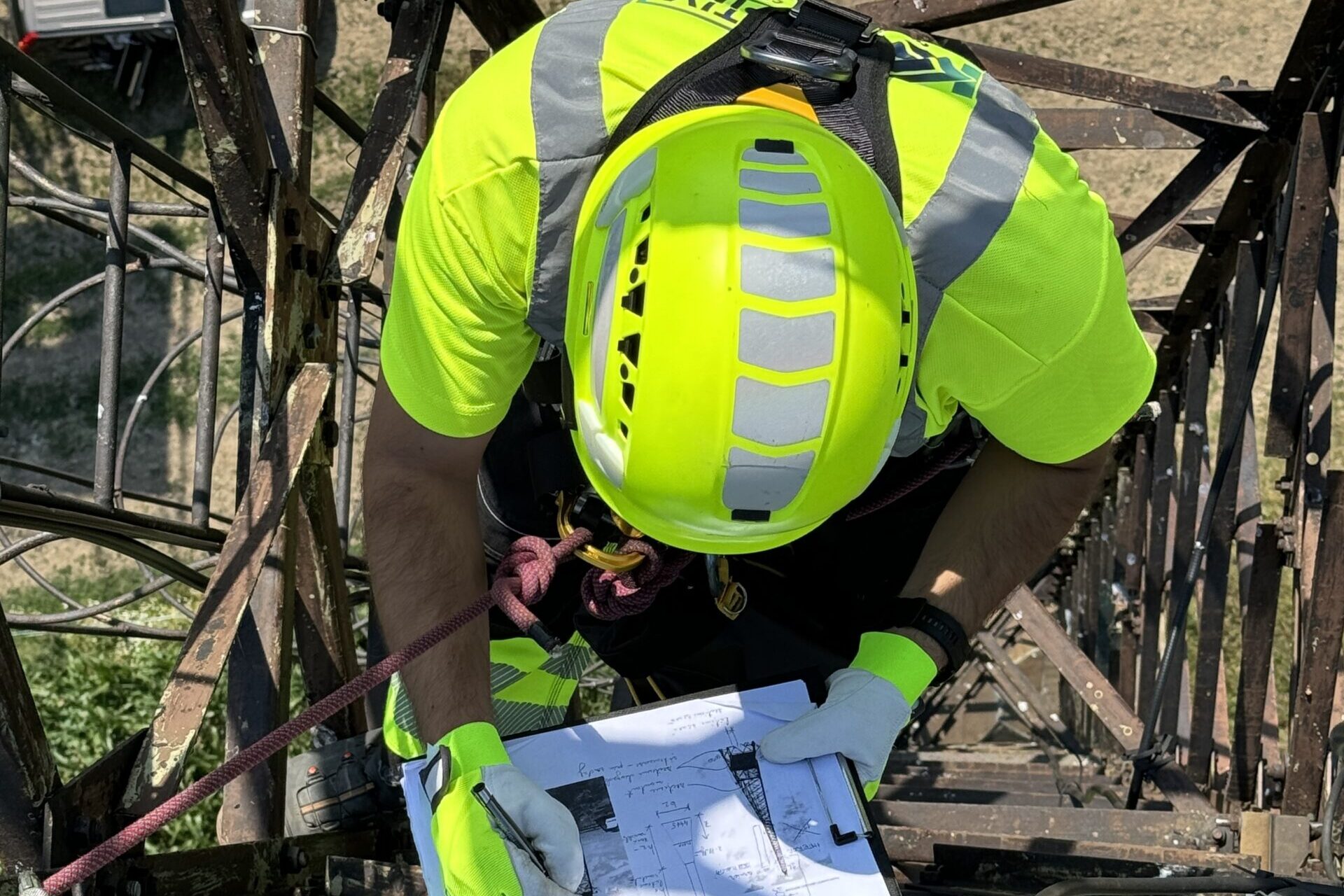
In the case of an industrial inspection, the goal is not just access to heights. Technicians must be able to get close enough to the targeted elements to verify and document them.
Depending on the project, utility climbers they can perform visual checks and photographic documentation in areas that cannot be properly analyzed from ground level.
The information obtained can later be used by technical managers for maintenance planning or to determine the need for further investigations.
What structures can be inspected by utility climbers?
The need for some utilitarian mountaineering works It frequently occurs when the elements to be checked are located at height or in areas with difficult access.
In the industrial environment, inspections may target:
- industrial halls and buildings;
- metal structures and fabrications;
- industrial roofs;
- facades and envelope elements;
- joints and fasteners;
- joints and seals;
- areas affected by corrosion;
- technical elements located at height;
- areas where infiltrations have been observed;
- other hard-to-reach components.
The use of techniques rope access allows the technician to approach the area to be inspected and timely documentation of any degradation.
Why are industrial structure inspections important?
Degradation in an area that is difficult to see can take a long time to develop before its effects become apparent.
Corrosion of a metal structure, damage to a seal, the appearance of infiltration or the degradation of an external element are examples of problems that may require more complex interventions if identified late.
Periodic inspections can help identify these situations at a stage where the company can analyze and plan intervention.
For maintenance managers, facility managers, and industrial facility administrators, the information obtained from an inspection can help prioritize work and plan resources.
Utility climbing company for access to difficult areas
Choosing the access method is an important part of preparing for an inspection.
In some situations, the installation of scaffolding or the use of a platform may be justified. In others, the objective of the inspection is to check a specific surface located in a difficult-to-access area.
O utility mountaineering company can analyze the configuration of the objective and determine whether rope access is an appropriate method for the intervention.
The advantage of rope access techniques lies in the possibility of directly reaching certain areas of the structure without installing extensive infrastructure exclusively for access.
However, the appropriate method must be determined for each individual project, depending on the configuration of the facility, the existing risks, and the type of work required.
Utility climbers for checking metal structures
Metal structures are an important component of many industrial facilities and can include elements located at considerable heights.
Exposure to environmental conditions and specific operational demands can lead over time to degradation of surface protection or the occurrence of corrosion.
When the areas in question are not accessible from the ground, utility climbers can reach them to carry out the checks provided for in the project.
Documenting the affected areas provides the maintenance team with additional information to determine next steps.
Utility mountaineering and preventive maintenance
Use of services utility mountaineering should not be limited to situations where there is already an urgent problem.
Rope access can also be integrated into preventive maintenance programs for industrial facilities, when there are areas that require periodic checks.
Through planned inspections, known vulnerable points can be monitored and potential degradations can be identified before they become visible through the effects produced.
The frequency of inspections must be established depending on the type of structure, operating conditions, the environment in which it is located and the applicable technical requirements.
Inspections and work at height without scaffolding
One of the situations in which utilitarian mountaineering An effective solution may be to check isolated points at height.
Erecting scaffolding to access a confined space can involve significant mobilization. Where the risk assessment and site configuration allow, rope access can provide an alternative.
After the inspection is completed, the same access method can be used, depending on the nature of the project, for certain work at height, maintenance operations or remedial interventions.
Thus, the company can successively approach identifying the problem, documenting it, and planning the necessary intervention.
How do you choose a utility climbing company for industrial work?
In the industrial environment, the choice of a utility climbing companies should not be based solely on the ability to perform access to height.
The team's experience, the qualifications of the technicians, the work procedures, the equipment used, and the way in which the risks specific to the objective are assessed and managed must be analyzed.
Another important aspect is the team's ability to work in an industrial environment where intervention at height must be coordinated with the activity carried out on site.
For B2B projects, planning, communication, and documentation of the intervention are important components of the service, along with the actual execution.
Utility climbing services for companies and industrial sites
Kreativ Alpin offers B2B services utility mountaineering, rope access, inspections and work at height for industrial sites and areas with difficult access.
The teams of utility climbers they can intervene to check structures, document hard-to-reach areas and carry out work at height established within the project.
Each intervention is analyzed according to the particularities of the site, access conditions and identified risks.
Are you looking for a utility climbing company for an industrial facility? Contact Kreativ Alpin for a project evaluation and determination of the right access and work at height solution.